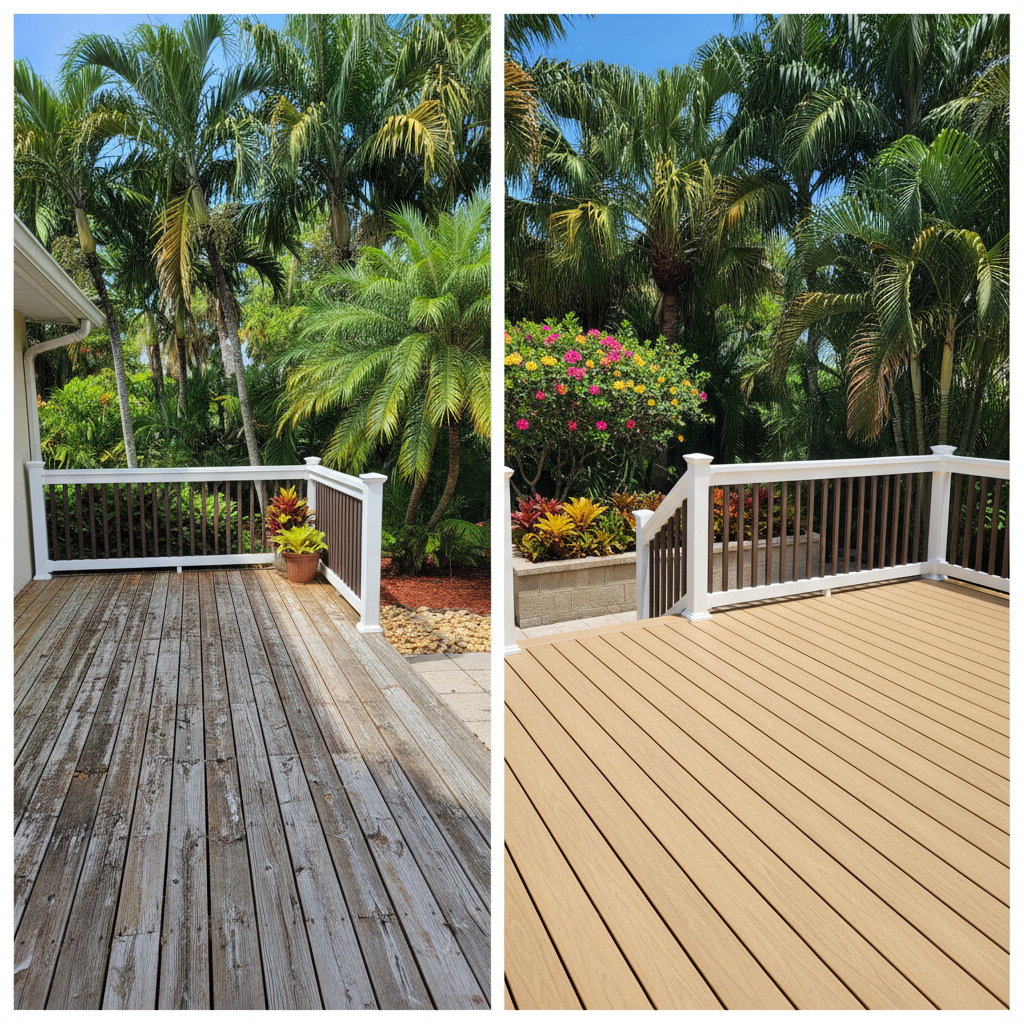
So, you're thinking about a new deck, and you've heard good things about Trex. Good call, especially living here in Fort Lauderdale. But once you've settled on Trex, there's still a big design question staring you down: do you want an elevated deck or one that's closer to the ground? This isn't just about how it looks; it impacts the cost, what you can actually do with the space, and even how long it'll hold up.
Elevated Trex Decks: The High Life
When I talk about an elevated deck, I'm usually thinking of one that's 18 inches or more off the ground. These are pretty common if your house has a raised foundation, or if you're building over uneven land or maybe a pool equipment pad. You'll spot a lot of them around the older homes in spots like Victoria Park, where houses often sit a bit higher, you know?
Pros of Going Up:
- Better Views: Got a sweet view of the Intracoastal, or even just your own backyard oasis? Getting up higher can really open that up.
- Airflow: This is huge in Florida. Elevated decks let a lot more air move underneath. That means less trapped moisture, which is a big win for keeping mold and mildew away, and it helps keep the deck boards cooler, too.
- Drainage: Water just drains right off an elevated structure. No puddles hanging around the base of your posts.
- Access for Maintenance: Sure, Trex is low-maintenance, but what's *under* the deck isn't always. An elevated deck makes it way easier to get to plumbing, electrical, or just clear out debris that might blow in.
- Foundation Flexibility: You can build right over existing concrete slabs, uneven ground, or even small landscaping features without a ton of extra prep work.
Cons of Going Up:
- Higher Cost: More framing materials, more labor, and often more complex engineering mean an elevated deck will always cost more upfront. You're basically building a whole sub-structure, after all.
- Permitting Can Be More Involved: Taller structures sometimes trigger more stringent building codes and inspections, especially if you're getting into significant heights.
- Stairs or Ramps: You'll almost certainly need steps, and probably railings, which adds to the material and labor costs.
- Less Usable Space Underneath: Unless it's high enough to be a usable patio, the space underneath is usually just for utility or storage.
Ground-Level Trex Decks: Keeping It Low
A ground-level deck, sometimes called a floating deck, is usually less than 18 inches off the ground—often just a few inches. These are popular for homes with slab foundations or for creating a smooth transition from an indoor living space to the outdoors.
Pros of Staying Low:
- Lower Cost: Significantly less framing material and labor. You're not building a whole foundation, just supporting the deck boards. This is often the most budget-friendly choice.
- Easier DIY Potential: If you're handy, a ground-level deck is a much more manageable DIY project than an elevated one.
- Seamless Transition: They create a very natural flow from your home to the yard, making your outdoor space feel like an extension of your indoor living.
- No Railings Needed (Often): If it's low enough (check local codes, but usually under 30 inches), you might not need railings, which saves money and keeps sightlines clear.
- Quicker Installation: Fewer structural components usually mean a faster build time.
Cons of Staying Low:
- Poor Airflow: This is the biggest drawback in Fort Lauderdale. Trapped moisture underneath can lead to mold, mildew, and even attract pests. You really need to be mindful of ventilation.
- Drainage Issues: If your yard doesn't drain well, water can sit under the deck, creating problems. Proper grading and drainage solutions are critical here.
- Pest Concerns: That dark, damp space underneath can become a haven for critters if you don't manage it right.
- Limited Views: You're not getting any elevated perspective, obviously.
- Ground Prep is Key: You absolutely need to clear the area of all vegetation, lay down a weed barrier, and often add gravel to prevent growth and help with drainage. Skip this, and you're asking for trouble.
My Recommendation for Fort Lauderdale Homeowners
Look, I've built a lot of decks down here with Aim High Decks, and I've seen what works and what absolutely doesn't. For Fort Lauderdale's climate – the humidity, the rain, the occasional flooding – I almost always lean towards an elevated Trex deck if the budget allows.
The superior airflow and drainage you get with an elevated structure are just too important for long-term durability and preventing those nasty mold and mildew issues that pop up so easily here. While a ground-level deck is cheaper upfront, the potential headaches from moisture and pests could end up costing you more in the long run, not to mention the constant battle against green slime. If you absolutely have to go ground-level, make sure your contractor (or you, if it's DIY) puts in serious effort on ground preparation, drainage, and ventilation. Don't skimp on those steps – seriously, don't.
Ultimately, the best choice depends on your specific property, your budget, and what you envision for your outdoor space. But for pure functionality and that quiet confidence in our tropical environment, getting that deck up off the ground is usually the smarter play.