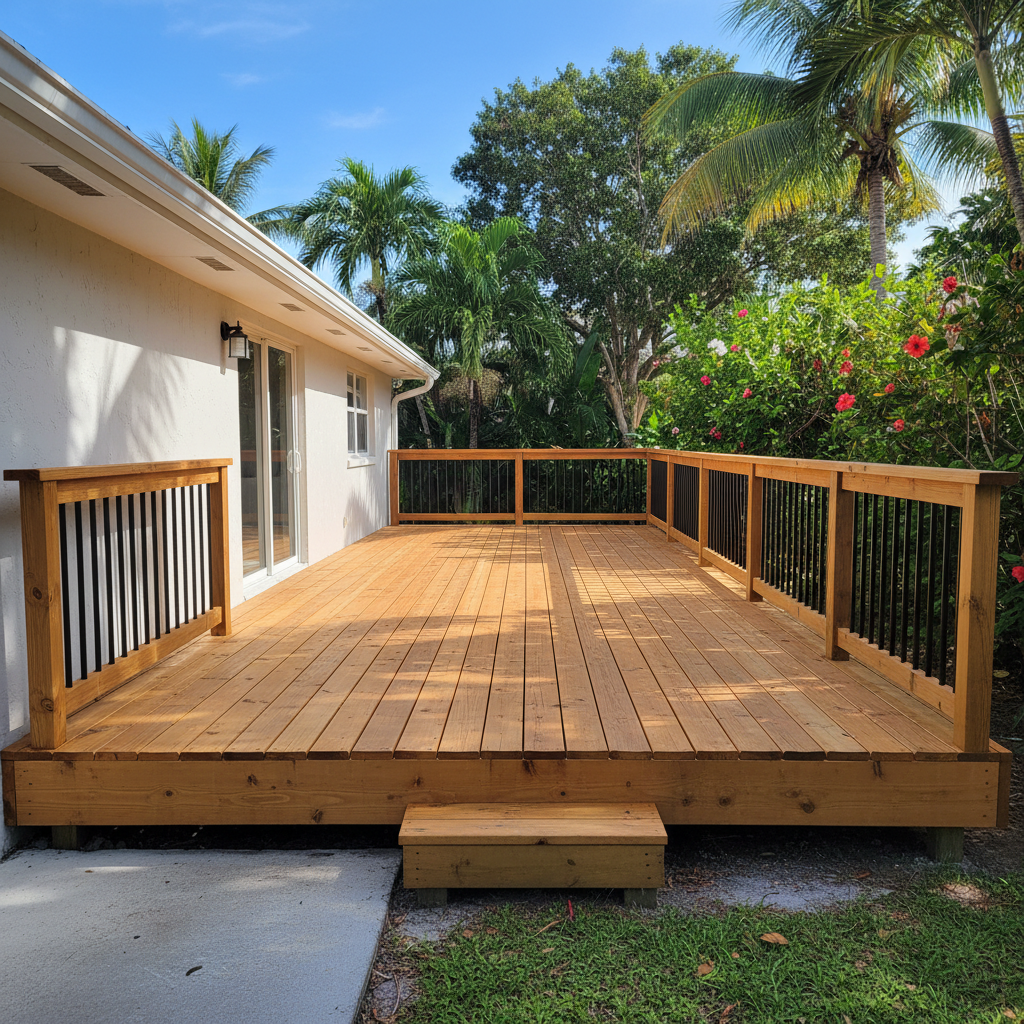
South Florida weather keeps us outdoors nearly twelve months out of the year, but it also takes a heavy toll on exterior wood and composite structures. If you live anywhere from Las Olas down to the shaded canal-front lots in Coral Ridge, you already know that our intense sun, afternoon downpours, and salty coastal breezes create a punishing environment for any outdoor build. Aim High Decks sees firsthand how local climate conditions impact structural integrity, and timing your maintenance right makes all the difference between a minor fix and a total rebuild.
Timing Your Deck Repairs Around the South Florida Seasons
Many homeowners think about fixing up their outdoor spaces right before a big backyard barbecue or at the start of the summer rainy season. That is actually the worst time to schedule major work. Between June and October, our daily tropical storms and soaring humidity levels make it tough for sealants to cure properly and lumber to dry out. Instead, homeowners will want to target the drier months between November and April. This dry season gives us stable weather windows where wood is less saturated, fasteners hold better, and finishes can cure without getting washed out by sudden afternoon squalls.
What the Local Climate Does to Your Framing and Fasteners
Our unique mix of high humidity and brackish canal air acts as an accelerant for corrosion and decay. If you have hidden fasteners or standard steel screws holding your boards down, moisture trapped in the joints starts rust expansion long before you see surface stains. Down here in Broward County, we also deal with aggressive UV breakdown that dries out surface fibers and leaves wood vulnerable to moisture intrusion. When boards start cupping, splitting, or feeling spongy near ledger boards and posts, the situation is a structural red flag that needs immediate attention rather than a cosmetic touch-up.
- Inspect ledger flashing and hardware twice a year for early rust and separation.
- Clear out damp leaf litter and organic debris trapped between deck boards to stop mold growth.
- Check post bases for rot where they meet concrete piers or wet soil.
Protecting Your Investment Year-Round
Staying ahead of repairs means treating maintenance as an ongoing habit rather than a once-a-year chore. Give your Deck a gentle wash every few months to clear away salt residue and pollen accumulation that attracts moisture. If you are due for re-staining or sealing, pick a stretch of clear days when the humidity drops below normal. Catching loose boards, popped nails, or soft spots early keeps repair bills small and ensures your outdoor space stays safe for family and friends through every season. Aim High Decks provides Deck Repair services for homes in Fort Lauderdale, FL.