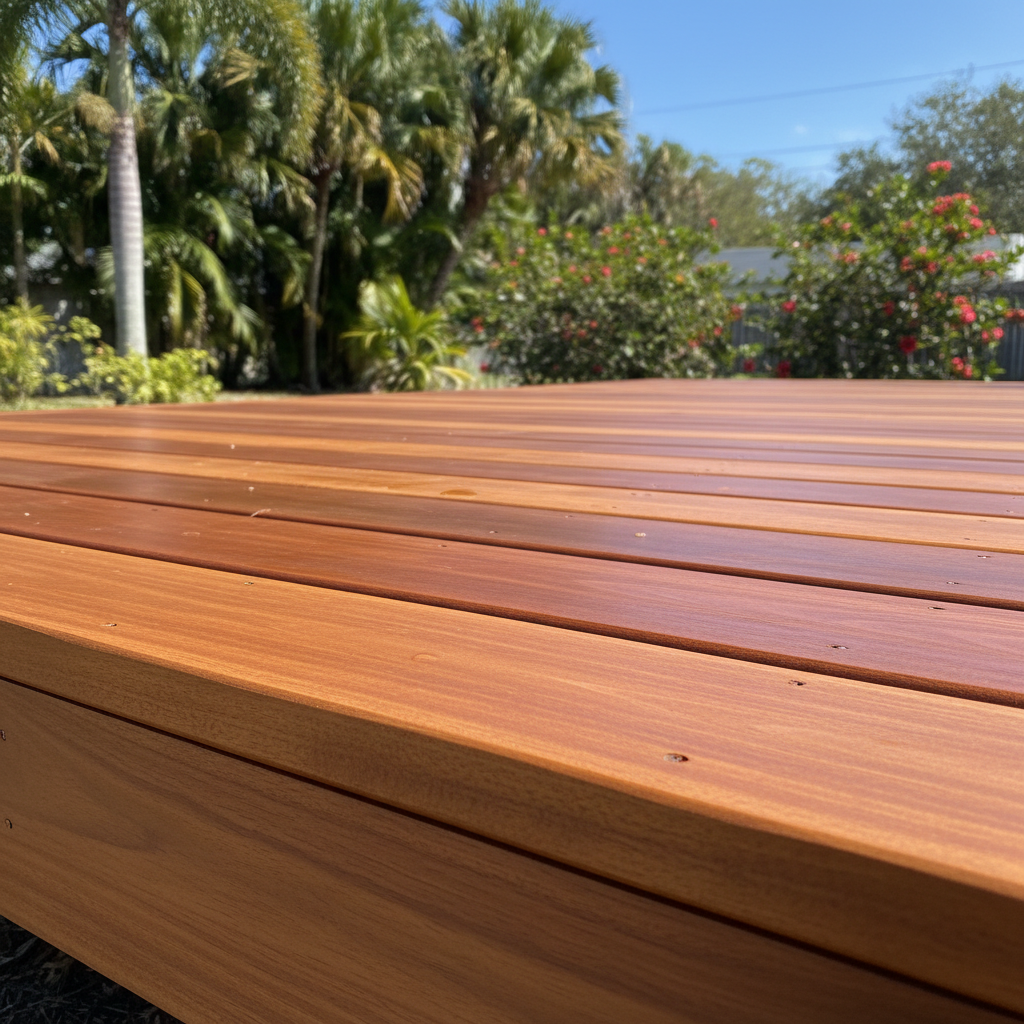
So, you've got a deck, right? And you want it to look good and stick around for a while, especially with our Fort Lauderdale sun and humidity doing their thing. I get asked a ton about painting versus staining decks here in South Florida, and honestly, there's just so much bad info floating around. So, let's set the record straight. Here are the questions I hear most often, and my honest answers.
Should I paint or stain my wood deck in Fort Lauderdale?
This is probably the big one, and it really just depends on what you're hoping for. Paint gives you a solid, opaque color. It's awesome for hiding flaws in older wood, or if you're going for a really bold color change. The downside? Paint sits on top of the wood, creating a film. That film can peel, chip, or crack, especially with our intense sun and the wood constantly expanding and shrinking in this humid climate. When it goes bad, stripping it off is a real headache.
Stain, on the other hand, soaks into the wood. You can find different opacities: clear, semi-transparent, semi-solid, and solid. Clear and semi-transparent stains let that beautiful natural wood grain peek through, which many folks really love. They usually don't peel like paint, but they do fade over time and need a fresh coat more often. Solid stains give you more color and cover more imperfections, almost like a thin paint. But because they still penetrate better than paint, they're much less likely to peel. For most wood decks in Fort Lauderdale, especially if your wood is good quality, I usually recommend a quality solid or semi-solid stain. It offers great protection without all the peeling drama you get with paint.
How often do I need to re-stain or repaint my deck here?
Again, it depends on the product you use and how much sun your deck bakes in. For paint, if it's a good exterior deck paint and applied right, you might get 3-5 years before things really start looking rough. But once it begins to peel, you're looking at a full strip-down and repaint.
Stains are a bit different. Clear or semi-transparent stains, especially on decks that get blasted by sun all day, might need reapplying every 1-2 years. They just don't have as much pigment to block those harsh UV rays. Semi-solid and solid stains typically last longer, maybe 2-4 years. The cool thing with stain is that often, you can just clean the deck and put on another coat without all that stripping. That saves you a ton of time and money, believe me.
Our Fort Lauderdale weather, with its brutal UV and heavy rains, is just savage on any outdoor finish. Don't expect finishes to last as long here as they might in a milder climate up north. Regular cleaning and checking things over are your best defense.
What kind of prep work is needed before painting or staining?
This is where most DIY projects go sideways, and it's absolutely the most important step. You simply cannot skip proper preparation. First, clean the deck thoroughly. And I mean *really* clean it. Grab a good deck cleaner and a pressure washer. Just don't crank the pressure too high, or you'll damage the wood fibers, especially on softer woods. Get rid of all the dirt, grime, mildew, and any loose, flaking old finish. If there's old paint or solid stain that's peeling, you'll need to scrape and sand those spots down to bare wood. For a full repaint, you're stripping everything.
Once it's clean, let it dry completely. And I mean *completely*. In our humidity, this can take a couple of days, even if it looks dry on the surface. If you stain or paint over damp wood, it's going to fail way too soon. Finally, sand any rough spots, especially if you've got splinters. A smooth, clean, dry surface is key for good adhesion and a finish that actually lasts.
Can I stain or paint over composite decking?
Generally, no. Most composite decking manufacturers don't recommend painting or staining their products. Composite decks are made to be low maintenance and already have their color built right into the material. Putting paint or stain on them can actually void your warranty. Plus, composites don't soak up finishes the way wood does, so it's likely to peel or wear off quickly and just look terrible. If your composite deck is starting to look faded or chalky, there are some special cleaners and restorers made just for composite materials, but traditional paints and stains aren't the answer. If you're thinking about a new composite deck, Aim High Decks can help you pick out a color that'll really last.
What's the best time of year to paint or stain a deck in Fort Lauderdale?
This one's tricky because of our distinct wet and dry seasons. You need a stretch of dry weather, ideally with moderate temperatures and low humidity. That usually points to our dry season, roughly November through April. You definitely want to avoid the intense heat and daily afternoon thunderstorms of summer. The perfect conditions are generally 50-90°F (10-32°C) with low humidity and no rain for at least 24-48 hours after you apply it. Trying to do it in July or August is just asking for trouble with the humidity and those pop-up showers.
What about mildew and algae growth after I finish the deck?
Ah, the classic South Florida problem. No matter how well you prep or what product you use, mildew and algae are going to try and set up shop on your deck. Good quality deck paints and stains often have mildewcides mixed in, but they're not foolproof. Your best defense is just regular cleaning. I recommend a gentle cleaning every 6-12 months, especially if your deck is in a shady spot or near a canal where moisture hangs around. A simple scrub with a mild deck cleaner and a soft brush, followed by a rinse, can keep that green stuff at bay. Don't wait until it's a full-blown ecosystem before you clean it. Stay on top of it, and your finish will look better and last longer.
Should I use a primer?
For painting, yes, absolutely. A good quality exterior wood primer is super important, especially if you're painting bare wood or making a big color change. Primer helps with adhesion, gives you a uniform base, and seals the wood, which is key for stopping moisture absorption and tannin bleed (those reddish-brown stains that can come through light-colored paint from the wood itself). For staining, it's less common. Most stains are designed to soak right into the wood. Some manufacturers offer a